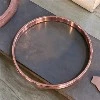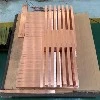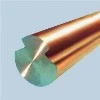
A contact wire-also known as an overhead contact line-is a critical component of an overhead catenary system. It is typically cylindrical in shape, featuring longitudinal grooves on both sides. These grooves facilitate the installation of clamps used to suspend and secure the wire, without interfering with the sliding contact of the pantograph collector strip. The underside of the wire, which makes direct contact with the pantograph, is curved and is referred to as the "working surface." By maintaining sliding contact with the pantograph of an electric locomotive, the contact wire delivers electrical current directly to the vehicle; its performance is therefore a key factor in the quality of power collection and the safe operation of the locomotive. Among all types of power-supply conductors, the contact wire operates in the most demanding environment. During regular service, it must withstand impacts, vibrations, temperature fluctuations, environmental corrosion, mechanical wear, electrical arcing (arcing erosion), and significant operational tension. Consequently, the performance of the contact wire is directly linked to the safe operation of high-speed trains.
Oct 14, 2026
Leave a message
Introduction To Contact Wires
Send Inquiry