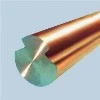
Yes, hollow conductors fall under the category of special-structure conductors.
Structure and Application of Hollow Conductors
Hollow conductors are composed of coils, featuring a hollow interior. Typically manufactured from high-strength aluminum alloys, they offer excellent electrical conductivity, a lightweight design, and a high capacity for handling AC discharge in relation to insulators. Due to their unique structure and performance characteristics, hollow conductors are widely used in the field of power transmission.
Definition of Special-Structure Conductors
Special-structure conductors refer to conductors that differ from standard conductors due to their specific structural or performance attributes. This category includes, but is not limited to, stranded conductors, aluminum conductor steel-reinforced (ACSR) cables, fiber-reinforced aluminum-core steel wires, and all-dielectric self-supporting (ADSS) optical cables.
Are Hollow Conductors Special-Structure Conductors?
Based on the definition above, it can be concluded that hollow conductors-which differ from standard conductors by virtue of their coil-based, hollow construction-are classified as special-structure conductors.
Operational Advantages of Hollow Conductors
The structure and performance of hollow conductors provide numerous operational advantages. First, they exhibit reduced skin and proximity effects, which effectively lowers line losses. Second, their lightweight nature reduces the load on supporting structures and towers, while also offering superior resistance to wind loads. Furthermore, hollow conductors can inherently suppress oscillations, enhancing the line's seismic resilience; this helps minimize the occurrence of line-related incidents and improves the overall reliability of power supply.