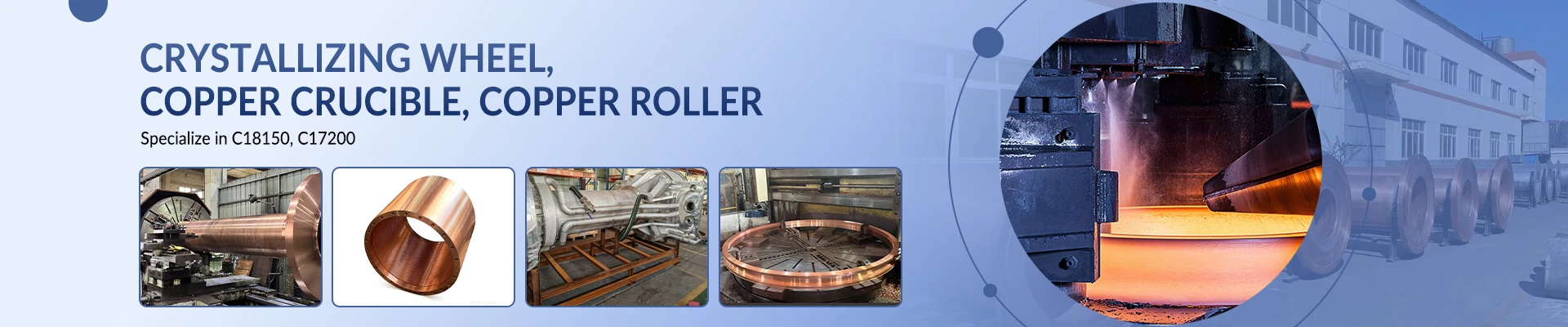
Material Selection: Common materials for seam welding wheels include copper alloys such as chromium-zirconium copper (CuCr1Zr, grade C18150) and beryllium copper (e.g., C17510, C17500). Chromium-zirconium copper offers excellent electrical conductivity (>75% IACS) and a high softening temperature (approximately 550°C–950°C), making it well-suited for continuous, high-load welding operations. Beryllium copper, by contrast, provides greater hardness (up to 36–42 HRC) and a higher softening temperature (870°C–980°C), making it ideal for applications that demand superior wear resistance.
Balancing Hardness and Conductivity: While higher hardness enhances a welding wheel's wear resistance and extends its service life, excessive hardness can compromise electrical conductivity, thereby reducing welding efficiency. Consequently, the appropriate hardness level must be selected based on the specific materials being welded (such as galvanized sheet, stainless steel, or low-carbon steel) and the required welding current.
Customization: Given the diverse configurations of welding machines-varying in terms of wheel diameter, thickness, and shaft bore dimensions-most seam welding wheels can be custom-manufactured. Suppliers can typically perform precision machining based on provided technical drawings or samples, ensuring accurate assembly and fit.