Structural Differences
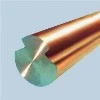
Hollow conductors lack a central core; instead, they consist of one or more hollow metal tubes. This structural design provides a larger surface area compared to solid conductors of the same volume, which facilitates better heat dissipation. In contrast, solid conductors are composed of a solid metal core with an outer covering, representing a simpler structural design.
Weight Comparison
Because they contain a hollow cavity, hollow conductors are significantly lighter than solid conductors of the same volume. This characteristic is particularly advantageous in applications such as power transmission towers, where the use of hollow conductors reduces the load on the towers and helps achieve better physical balance.
Corrosion Resistance
Solid conductors typically have a relatively thin outer covering, making them susceptible to oxidation and other external factors that can lead to corrosion. Hollow conductors, by comparison, are usually treated with one or more layers of anti-corrosive coating, which provides superior protection against corrosion and extends their service life.
Application Scenarios
Hollow conductors are widely used in power transmission lines due to their low weight, high strength, low electrical resistance, ease of installation, and resistance to corrosion. Their advantages are especially pronounced in long-distance power transmission or high-altitude overhead installations. However, in certain specialized environments-such as coastal regions where the risk of corrosion is high-solid conductors may be preferred for specific applications due to their robust corrosion resistance.